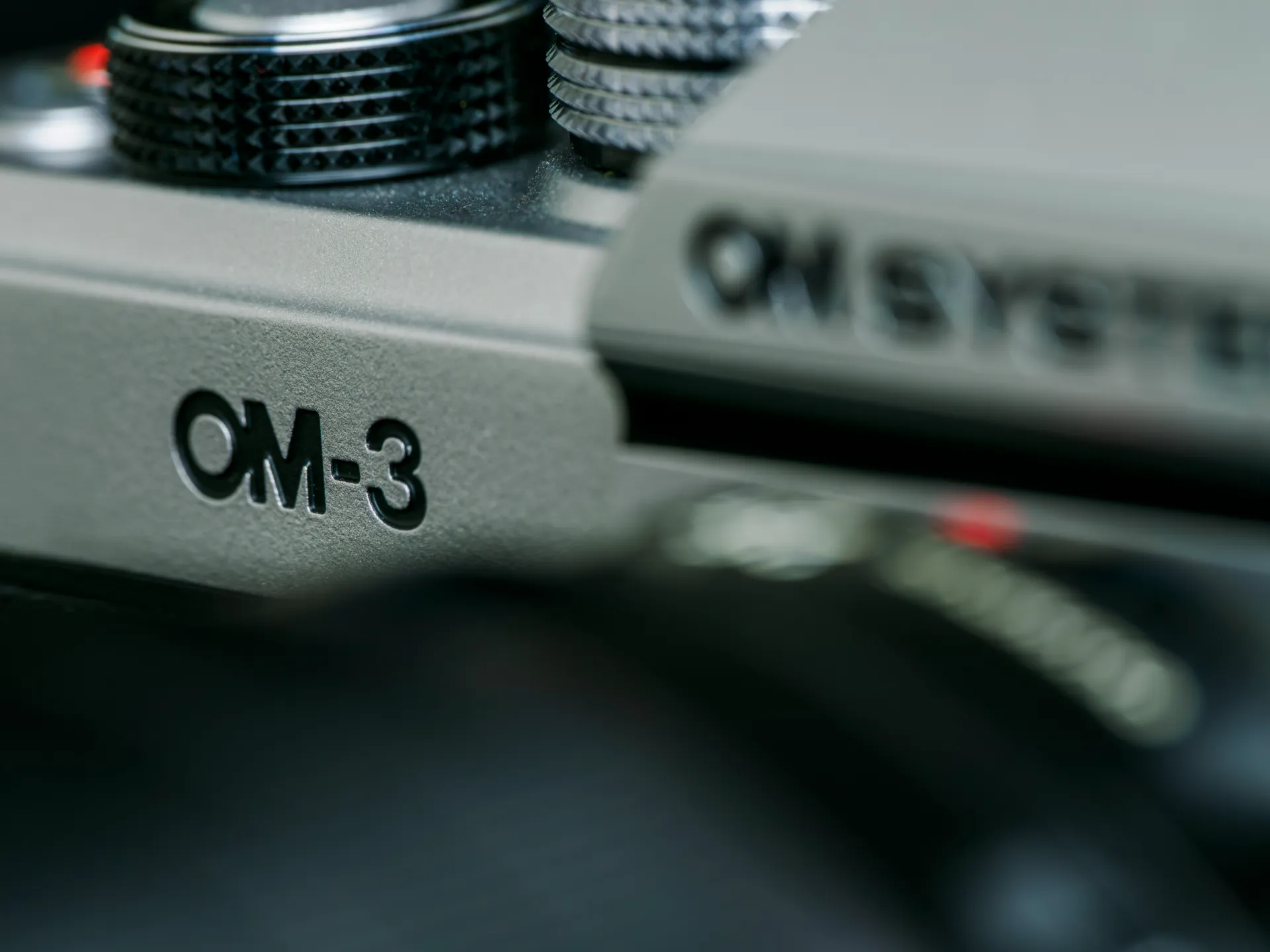
OM Digital Solutions unveiled the OM-3 back in February 2025. At the time, based on the information available, I wrote the article “Opinion: OM System OM-3” (German), in which I asked why it hadn’t become a PEN-F II instead. Now I’ve finally had the chance to use the OM-3, and I want to share my impressions here and show how the camera fits into the overall OM System line-up, especially after the OM System PEN was unveiled in early September. The technical details have already been covered extensively elsewhere, so I’ll focus here on my personal impression and on whether I could imagine using this camera myself.
The Design of the OM-3
If you know me, you know that I’m a big fan of camera designs inspired by the cameras of the 1970s, as long as they still offer modern handling. For me, the OM-3 is exactly that. It plays with design elements from the original Olympus OM-1, introduced in 1972, while keeping the familiar operating concept of modern OM Digital Solutions cameras. As a user of the digital OM-1, I therefore had no trouble operating the camera.
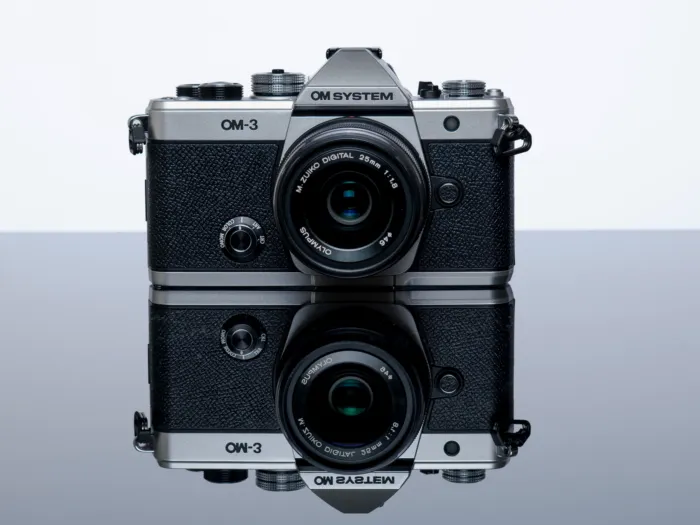
The downside of this design is that the OM-3 unfortunately doesn’t have a handgrip. That might have worked fine in the 70s, but a grip is essential nowadays. Modern lenses are bigger and heavier than they used to be, and a handgrip simply gives you more control and makes the camera easier to hold. It’s no surprise that several manufacturers started offering a handgrip as an accessory shortly after the OM-3 was announced.
Handling the OM-3
Handling the OM-3 feels very familiar to me. On one hand, it has exactly the same layout as my OM-1; on the other, I already knew the Creative Dial from my PEN-F. Still, the handling differs quite a bit from the OM-1, because it has far fewer customizable buttons. What I missed most were the two buttons on the front, next to the lens. If you’ve read my article “OM-1 User Modes: My Setup for ProCapture and Panorama” (German), you’ll understand why. I use those two buttons to quickly activate ProCapture SH1 and SH2. In wildlife and bird photography, quick access is essential, otherwise you risk missing an important moment.
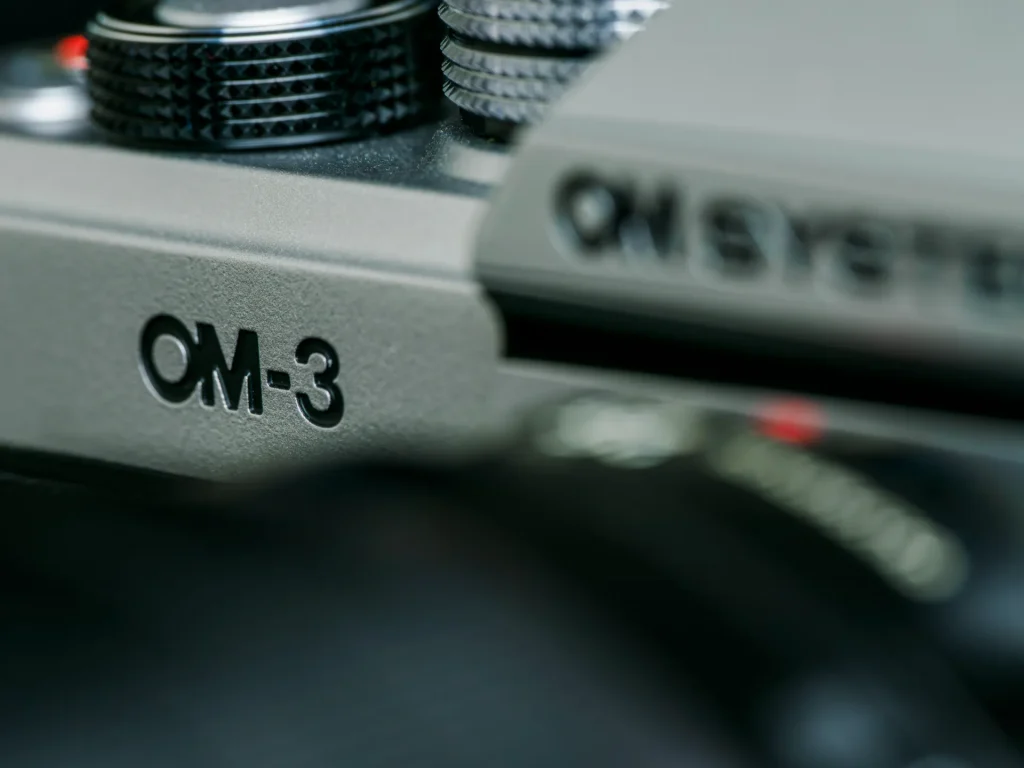
The Creative Dial, on the other hand, is a welcome addition. It gives you quick access to various color and black-and-white profiles, which could also be called film characteristics. Interestingly, Fuji has been very successful with offering different film characteristics, even though Olympus/OM Digital Solutions implemented this idea much earlier. Apparently, this creative option never quite caught on with users. Maybe the Creative Dial can change that, since it puts these creative color modes a little more in the spotlight.
The “CP” button is convenient, but not a real added benefit. Other cameras also let you access computational modes directly and switch between them. Here too, the naming of the button and the messaging around it fall more under marketing than actually providing extra value for the user.
The OM-3 in the OM System Line-up
Even though the camera doesn’t make much sense for me personally, the OM-3 has its place in the OM System line-up. I’ve covered in detail which OM camera fits which type of photographer in “OM-3 vs. OM-5 Mark II vs. OM-1 Mark II“. Just briefly here: if you’re a wildlife photographer, the OM-1 is the better choice. But if you want to use the camera in your everyday life and mainly shoot street photography, the OM-3 is the better fit. Technically, it offers much of what the OM-1 offers too, just without the same level of customization.
What’s your take on the OM-3, and which camera do you use? I’d love to read your comments and hear your thoughts on where each of these two cameras fits best.