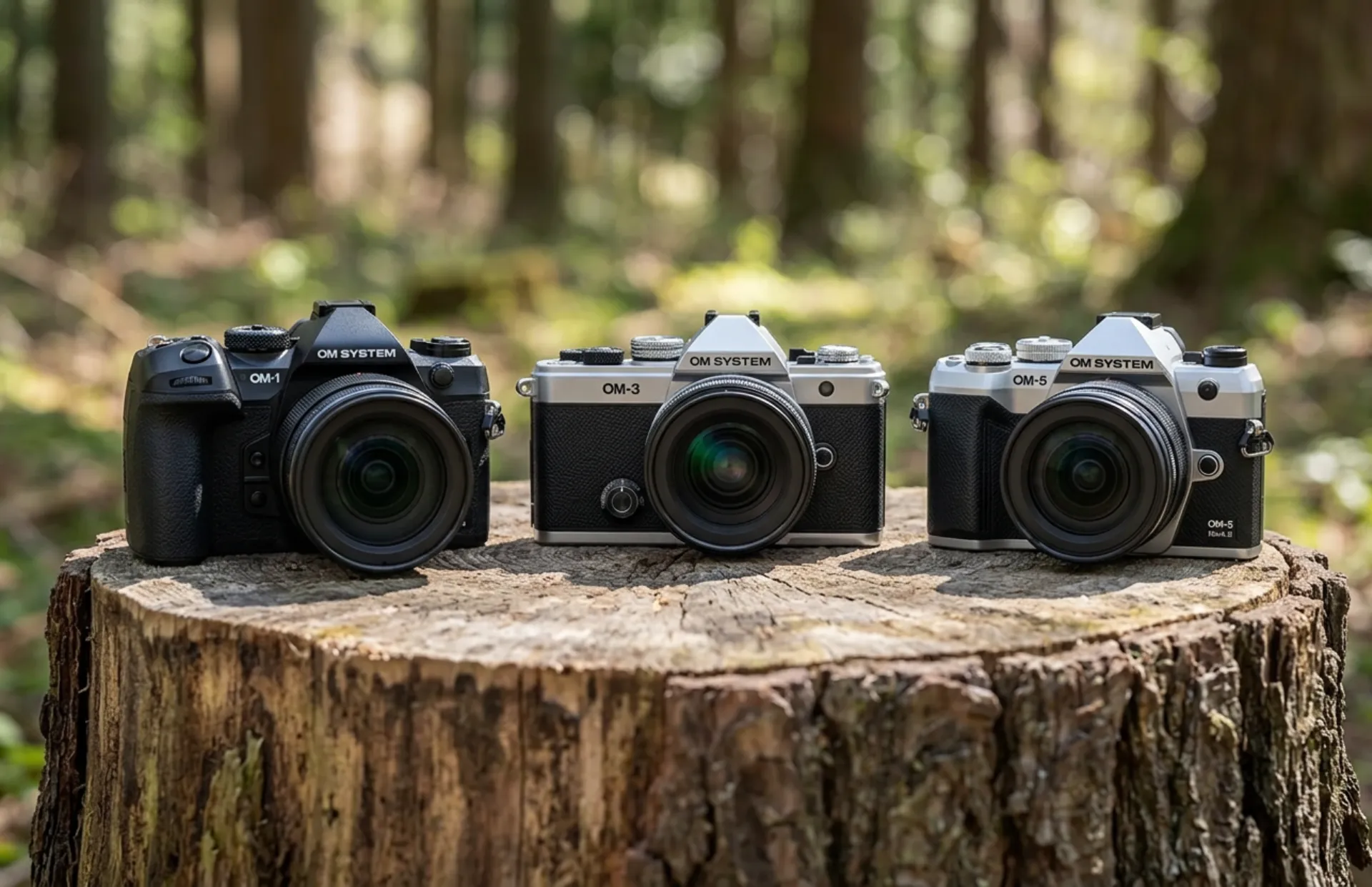
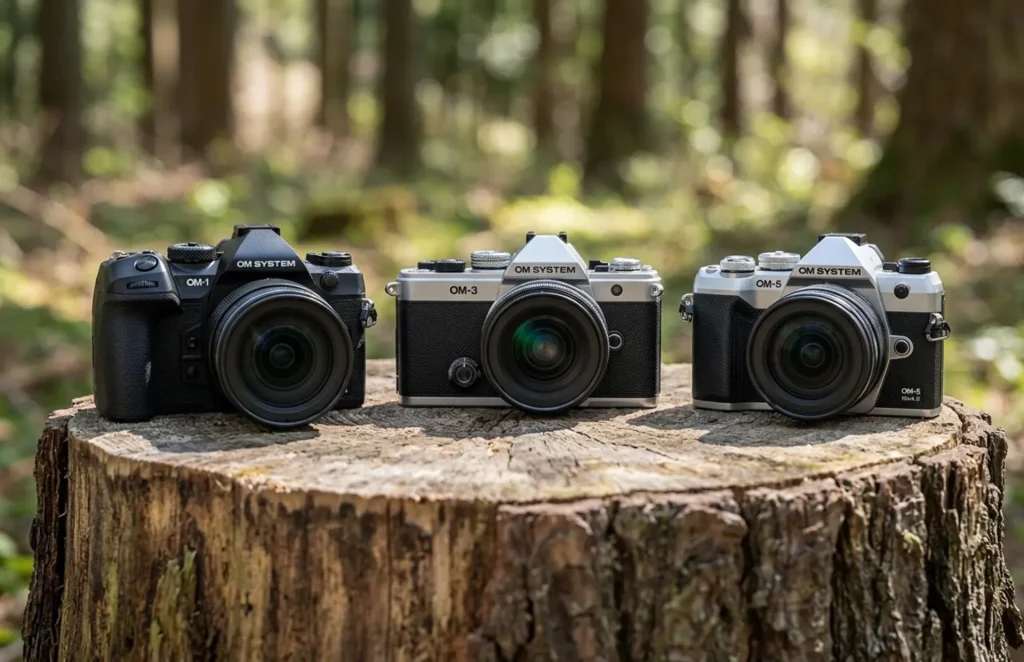
Three cameras, one sensor format, yet you can end up with completely different choices depending on what you shoot. If you search for “OM-3 vs OM-5” or “OM-1 Mark II vs OM-3,” you mostly land on automatically generated spec-sheet comparisons. Row after row of megapixels, AF points, burst rates. What’s missing is the answer to the real question: for you, with your photography, which of the three is the right one? That’s exactly what I want to answer here. Not sorted by spec category, but by use case. And for every match, I’ll also tell you why I made it, not just that I did. Since I mainly photograph wildlife, the OM-1 is my camera; even so, I’m currently testing the OM-3 to find out whether it could be a good fit for me too. I’ll share the results soon.
The three cameras in brief
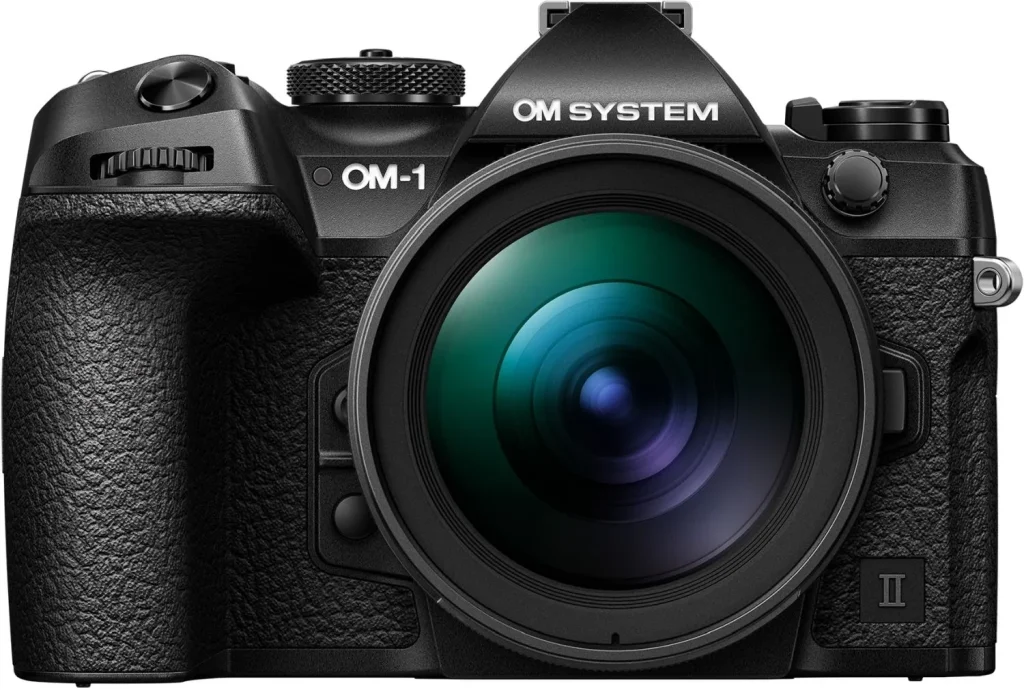
OM-1 Mark II (since February 2024): the flagship. Built for speed, reliability, and the toughest conditions.
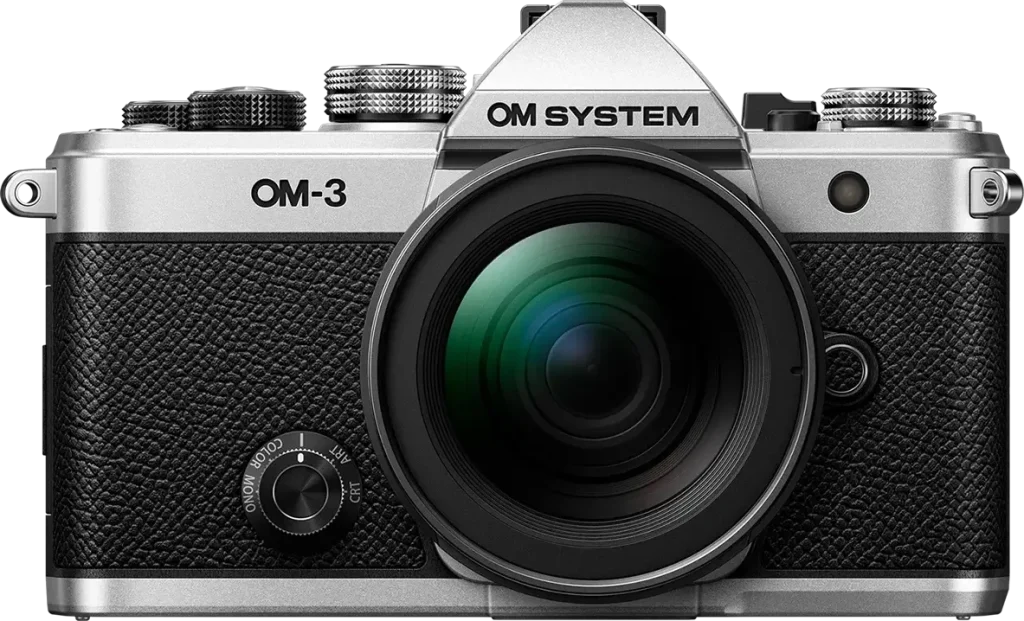
OM-3 (since February 2025): the flagship in a compact, retro-styled body, inspired by the analog OM-1 from the 1970s.

OM-5 Mark II (since June 2025): the compact, lightweight travel camera with full weather sealing.
Now, in order, with the reasoning behind each pick.
Wildlife and action: the OM-1 Mark II
If you photograph birds in flight, predators on the move, or subjects in general that don’t care about your schedule, there’s hardly a way around the OM-1 Mark II. There are concrete technical reasons for that, not a gut feeling:
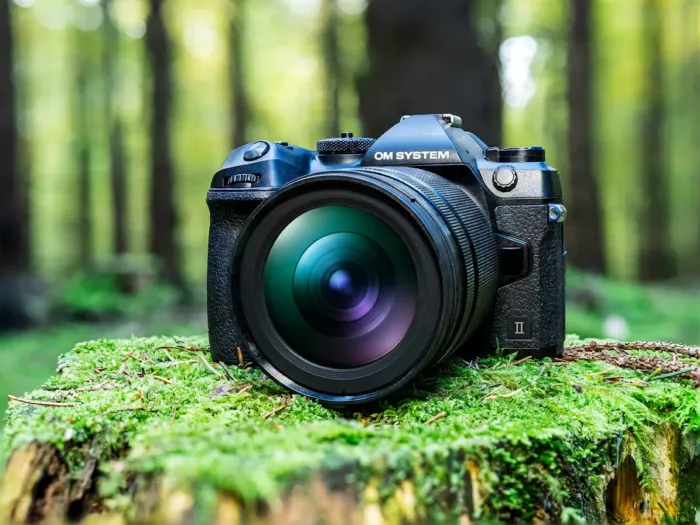
Subject detection is the biggest difference.
The OM-1 Mark II and the OM-3 automatically recognize birds, mammals, vehicles, planes, and trains, and track focus on them even if the animal turns or is partially obscured. The OM-5 Mark II can’t do that. It only recognizes faces and eyes. For a lapwing in a steep dive, that’s a difference that decides whether the shot is sharp, not whether it’s convenient.
1053 AF points versus 121.
The OM-1 Mark II and the OM-3 cover the frame with almost nine times as many focus points as the OM-5 Mark II. When a bird flies across the frame, that means focus stays on the subject no matter where it appears in the viewfinder.
Up to 120 frames per second, plus two card slots.
None of the other two models has two card slots. That gives you a couple of options: either you get a backup of your images the moment you shoot, or sorting your images afterward becomes easier. The second card slot isn’t a nice-to-have. If one card fails, you still have all your images.
The brightest, largest viewfinder of the three.
With 5.76 million dots and 0.83× magnification (35mm equivalent), you see fine detail in feathers or fur the moment you frame the shot, not just later on the monitor. You’ll notice this during fast panning. You can follow a fast-moving subject more precisely, which increases your hit rate.
In short: the OM-1 Mark II is strongest exactly where detection speed, focus accuracy, and reliability directly decide the shot. That costs weight and money, but that’s exactly what it’s built for.
In practice, you notice the differences fairly quickly. Pre-programmed buttons let you recall camera settings at any time, even without taking the camera away from your eye. So you don’t lose valuable time, which in the worst case could mean missing the scene entirely.
Travel and outdoors: the OM-5 Mark II
The OM-5 Mark II loses out on AF points and subject detection compared to the other two. And yet, for many people it’s the right choice, because it consistently follows a different priority: carrying as little weight as possible without compromising on image quality or ruggedness.
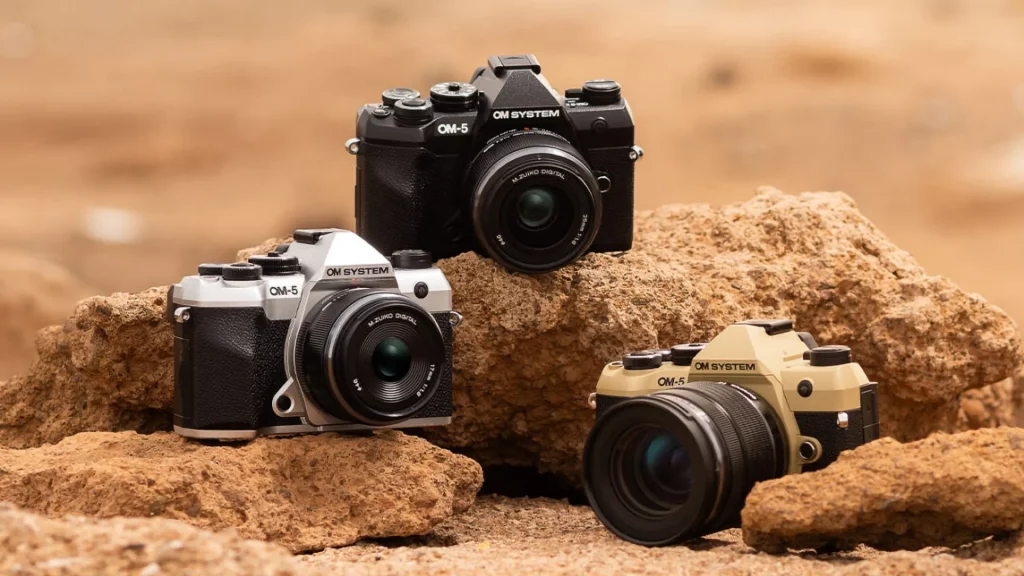
At 418 grams, the lightest and most compact of the three.
On a multi-day hike, on a bike ride, or when the camera simply has to hang from your shoulder all day, every gram counts twice. The difference from the OM-1 Mark II is over 180 grams, and you’ll feel that after eight hours on the trail. Since lens requirements for travel and outdoor use aren’t as demanding as for wildlife and action photography, you can also choose smaller, lighter lenses, which reduces the weight even further.
Full weather sealing despite a compact build.
The OM-5 Mark II has the same IP53 dust and splash protection as the two larger models. So you save weight without sacrificing reliability in the field. That’s often different with compact cameras from other manufacturers, where compactness usually comes at the cost of sealing.
USB-C charging on the go.
Especially on multi-day trips without an outlet, you can charge the camera directly from a power bank. Combined with the lower weight, it’s a package that’s well thought out for travel and outdoor use.
Where the lower AF performance is more than enough.
Landscapes, architecture, travel reportage, occasional wildlife sightings on vacation: here you rarely need full AI subject detection or 120 frames per second. 121 AF points and up to 30 frames per second are more than enough for the vast majority of travel situations.
The OM-5 Mark II isn’t a stripped-down entry-level model, then. It’s a deliberate choice for weight and ruggedness over maximum system performance. That’s a different thing altogether.
On a hike, chances are you’re not just carrying your camera gear, but also food and clothing for bad weather. Every gram you save on the camera is either weight you don’t have to carry, or weight you can spend on extra supplies instead.
Street and everyday: the OM-3
The OM-3 is the most interesting of the three because it doesn’t fit neatly between the other two. Sensor, processor, 1053 AF points, and the complete AI subject detection are identical to the OM-1 Mark II. Technically, it’s flagship-level. Even so, I wouldn’t recommend it as the first choice for wildlife, and that’s exactly what points to its real target audience.
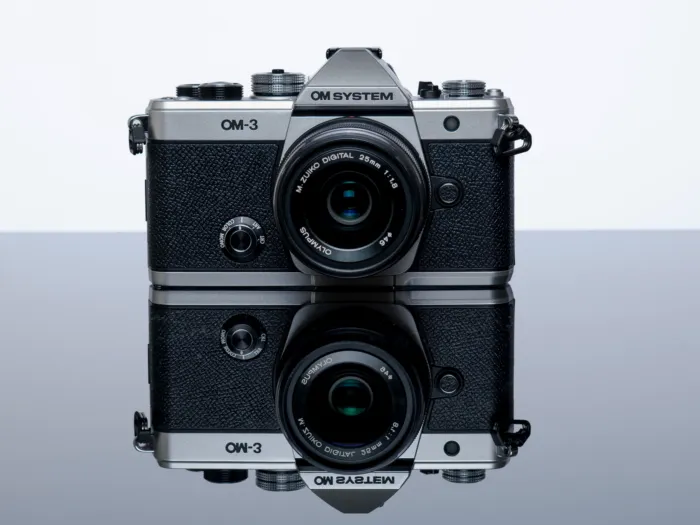
Why not for wildlife, even though the tech keeps up.
The OM-3 has only one card slot instead of two, and its mechanical burst rate is 6 instead of 10 frames per second. That’s enough for a single important moment in the field. For the reliability you need on a multi-week safari, where a card failure can cost you an entire day, the missing second slot is a real argument for the OM-1 Mark II. The OM-3 also has significantly fewer freely programmable buttons. I especially miss the two buttons next to the lens mount.
Why it still earns its place.
The retro-styled body, inspired by the analog OM-1 from the 1970s, is deliberately more unassuming than the OM-1 Mark II. For street photography, everyday reportage, or simply as a camera that doesn’t make you look like a professional with a press pass, that’s a genuine advantage. On top of that, you get the flagship’s image quality and focus accuracy in a body that’s lighter than the OM-1 Mark II and closer to the OM-5 Mark II.
The creative dial, a genuine standout feature.
Only the OM-3 has its own dial for picture styles right on the body: MONO for black-and-white profiles, COLOR for color profiles, ART for art filters, and CRT for the Color Creator. Neither the OM-1 Mark II nor the OM-5 Mark II has this. For street photography, that’s more than a gimmick. You switch between a high-contrast black-and-white look and color mid-scene with a twist of the dial, without lowering the viewfinder, digging into a menu, or missing the moment. Especially if you like to work with the finished look straight out of the camera instead of deciding everything in post, this is a tool that matches the pace of the street.
The special role in video.
The OM-3 is the only one of the three that can record slow motion at up to 240 frames per second in 4K and C4K too, not just Full HD like the other two. For anyone who shoots video alongside stills, that’s a detail no spec table shows, but one that makes a difference in the edit.
The OM-3 is the camera for anyone who wants flagship performance without the size, weight, or need for a second card slot. An always-with-you companion with a pro’s core.
A special case: the image stabilization numbers
What IBIS and Sync IS actually deliver, and how much a single stop is worth in practice, I’ve explained in detail in Image Stabilization: What IBIS and Sync IS Really Deliver. Here, I want to look at a special case that stands out when comparing the three cameras: a number that, at first glance, seems to work against the OM-3. The OM-1 Mark II is marketed with 8.5 stops of image stabilization, while the OM-3 and OM-5 Mark II are only rated at 6.5 stops in the body and 7.5 stops with Sync IS. That looks like a significant step backward. It isn’t, though, at least not to the extent the numbers suggest.
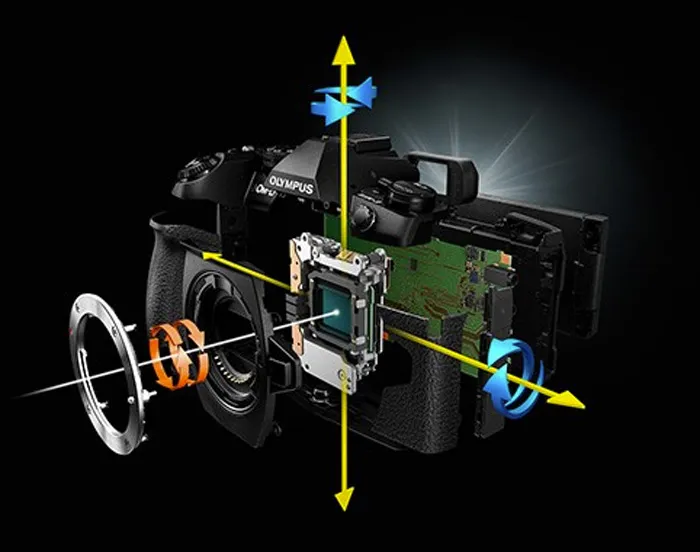
CIPA, the association that sets the uniform measurement method for all camera manufacturers, tightened its standard in January 2024. The old method measured only two axes of motion and used a more generous blur threshold. The new method also measures rotation around the lens axis and tests more strictly whether an image is truly sharp. I verified this in OM System’s official press releases: the OM-1 Mark II was still tested using the old, two-axis method, while the OM-3 and OM-5 Mark II were already tested using the new, stricter one.
A well-known example from another camera system shows the effect clearly: Nikon’s Coolpix P1100 bridge camera is rated at 4 stops of stabilization, while its technically identical predecessor, the P1000, is rated at 5 stops. Both use the exact same stabilization system. The only difference is the measurement method.
What does that mean for you? In practice, the OM-3 likely stabilizes much closer to the OM-1 Mark II than the raw numbers suggest. I can’t prove that without running my own side-by-side test under identical conditions, but the technical explanation for why the number alone is misleading is well documented.
What all three have in common
For all the differences by use case: on some points, the three cameras don’t differ at all. All three offer the same IP53 weather sealing, and all three handle High Res Shot (up to 80 megapixels on a tripod, 50 megapixels handheld), Live ND, and Focus Stacking. Only the Live GND filter for high-contrast scenes, such as a bright sky over a dark foreground, is missing on the OM-5 Mark II. So weather sealing and the computational photography features aren’t criteria for choosing between the three. The differences lie where I described them above: in AF, burst speed, weight, and card slots.
My recommendation
If you mostly photograph wildlife, birds in flight, or action where every millisecond counts, and you need the reliability of two card slots in the field: the OM-1 Mark II. If weight on hikes and travel matters more to you than maximum AF performance, and a solid, if not maximal, setup is enough for the occasional wildlife sighting: the OM-5 Mark II. If you want the flagship’s image quality and focus accuracy in a more compact, more unassuming body, without necessarily needing the second card slot: the OM-3.
The numbers at a glance
If you want to see the numbers behind these recommendations in more detail, here are all the specs where the three cameras actually differ. I’ve only left out what’s truly identical across all three: weather and dust sealing, which all three offer at IP53. But if you’ve read this far, you already know the table won’t tell you which camera is right for you, that’s what the sections above are for.
| Category | OM-1 Mark II | OM-3 | OM-5 Mark II |
|---|---|---|---|
| Positioning | Flagship for action/wildlife/professionals | Retro enthusiast camera | Compact travel/outdoor camera |
| Sensor | 20.37 MP effective, stacked sensor (22.93 million total pixels) | 20.37 MP effective, same stacked sensor as OM-1 II | 20.37 MP effective, older standard sensor (21.77 million total pixels) |
| Viewfinder (EVF) | 5.76 million dots, 21 mm eye point | 2.36 million dots, 27 mm eye point | 2.36 million dots, 27 mm eye point |
| Display | 3.0″ vari-angle touchscreen, 1.62 million dots | 3.0″ vari-angle touchscreen, 1.62 million dots | 3.0″ vari-angle touchscreen, 1.04 million dots |
| AF points | 1053 points | 1053 points | 121 points |
| AI subject detection | Yes, birds/animals/vehicles/planes/trains, etc. | Yes, identical to OM-1 II | No, only face/eye detection |
| ISO range | LOW 80, 100 – 102,400 | LOW 80, 100 – 102,400 | LOW 64, 100 – 25,600 |
| Burst shooting | 10 fps mech. · up to 20 fps electr. (AF/AE-C) · up to 50 fps (SH2) · up to 120 fps (SH1) | 6 fps mech. · up to 20 fps electr. · up to 50 fps (SH2) · up to 120 fps (SH1) | 6 fps mech. · up to 10 fps electr. · up to 30 fps (SH) |
| Image stabilization (IBIS)* | up to 8.5 EV stops, body and Sync IS (center only) | 6.5/5.5 EV stops body (center/corner) · 7.5/6.5 Sync IS (center/corner) | 6.5/5.5 EV stops body (center/corner) · 7.5/6.5 Sync IS (center/corner) |
| Memory cards | 2× SD (UHS-II) | 1× SD (UHS-II) | 1× SD (UHS-II) |
| Video, standard | up to C4K/4K, 60p, H.265, Log: OM-Log400/HLG | up to C4K/4K, 60p, H.265, Log: OM-Log400/HLG + OM-Cinema1/2 | up to C4K/4K, 60p, H.265, Log: OM-Log400 + OM-Cinema1/2 |
| Slow motion | up to 240 fps, Full HD only | up to 240 fps, also in 4K/C4K | up to 120 fps, Full HD only |
| Wi-Fi | dual-band 802.11a/b/g/n/ac | 2.4 GHz 802.11b/g/n | 2.4 GHz 802.11b/g/n |
| Bluetooth | 4.2 BLE | 4.2 BLE | 5.2 BLE |
| Headphone jack | Yes | Yes | No |
| Dimensions (W×H×D) | 134.8 × 91.6 × 72.7 mm | 139.3 × 88.9 × 45.8 mm | 125.3 × 85.2 × 52.0 mm |
| Weight (with battery/card) | 599 g | 496 g | 418 g |
| Battery | BLX-1, 2280 mAh | BLX-1, 2280 mAh | BLS-50, 1210 mAh (roughly half the capacity) |
| Computational photography | High Res Shot (80/50 MP), Live ND, Live GND, Focus Stacking | High Res Shot (80/50 MP), Live ND, Live GND, Focus Stacking | High Res Shot (80/50 MP), Live ND, Focus Stacking, no Live GND |
*Not directly comparable, as they were measured using different CIPA methodologies. See the “A special case: the image stabilization numbers” section above.
Conclusion
The three current OM System cameras share sensor resolution, weather sealing, and the most important computational photography features. The difference isn’t in image quality. It’s in how much focus speed, reliability, and pace you actually need, and how much weight you’re willing to carry for it. Answer that honestly for your own photography, and you’ll get to the right camera faster than any spec table could take you.
Which of the three do you use, or are you thinking about switching? Let me know what tips the scale for you!