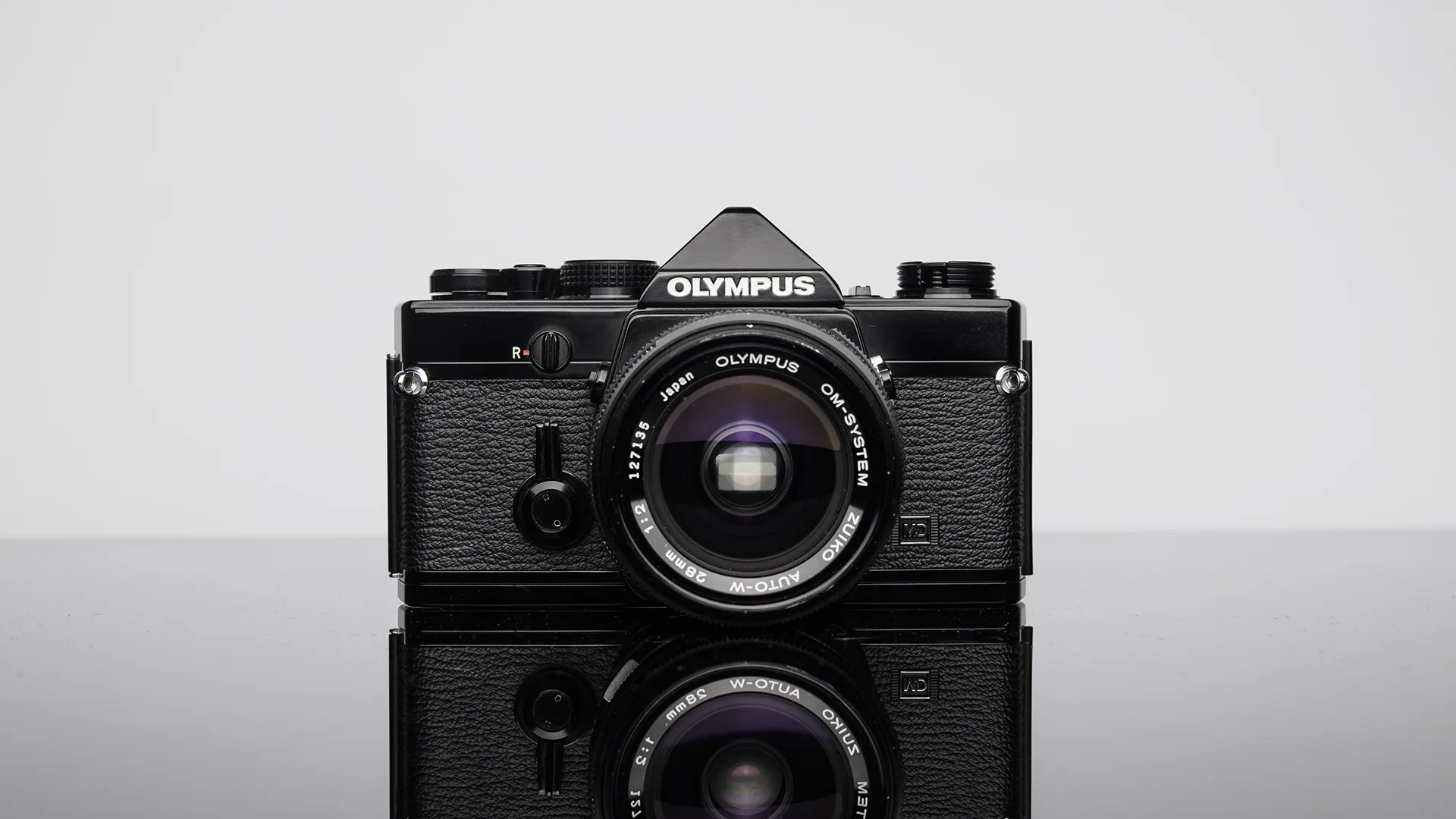
In 2026, OM System turns 90. Not the brand OM System itself, which has only existed since 1972, but camera manufacturing at this company, tracing back to Olympus’s optical division in 1936. I was born in 1972, the same year Olympus launched the OM-1. A camera and I, the same age. I only really noticed that while writing this article. I properly got to know the OM-1 at 16, when my father put his own OM-1 in my hands because I was in my school’s photography club and finally wanted to take pictures myself.
OM System itself will mark the anniversary year with its own content, official retrospectives and a new camera. That’s entirely their right, and it will no doubt be produced beautifully. I want to do something different here: tell my own version of the last 90 years, starting with my father’s camera, and with the question that has stuck with me since 2020: is what’s called OM System today still the same brand that built the OM-1 in 1972, the camera I learned to photograph with?
The name that was invented twice
The real story doesn’t begin in 1936, but in 1972, with a camera that was never meant to be called OM-1 in the first place. Yoshihisa Maitani, Olympus’s chief designer, wanted to build an SLR that was smaller and quieter than anything the competition had to offer. He named it M-1, after himself. Leitz, the company behind Leica, wasn’t amused. They already had their own M series, after all. Olympus backed down and turned M-1 into OM-1, “Olympus Maitani”, without much ceremony. Only a few thousand cameras shipped under the original name before the rename took effect. A naming dispute turned into the designation that would carry an entire company 50 years later.
Those few thousand M-1s are correspondingly rare today, and one of them now sits in my cabinet. I bought it myself a few years ago, not for its collector’s value, but because it’s closer to the moment where it all began than any later OM-1. A small irony of history: my father’s camera, the one I learned to photograph with, no longer exists. But the original version of it, carrying the name it was officially never allowed to keep for long, now belongs to me.
What made the OM-1 so special back then wasn’t just its size. It was an uncompromising compactness that proved an SLR doesn’t have to be bulky to be professional. That’s exactly what struck me as a 16-year-old the first time I held my father’s camera: it was light enough to carry around in my bag all day at school, yet still a full-fledged SLR that the photography club could take seriously. It’s a thought that runs through the entire OM story, all the way to the Micro Four Thirds format of today’s OM-1 Mark II.
The years OM helped shape the world of photography
The OM-1 was followed by the OM-2, OM-3 and OM-4, a lineup that still holds cult status among photographers today. My father’s OM-1 became my first camera, in the sense that he handed it over to me as soon as it was clear I wanted more than just a few holiday snapshots. The 1970s and 80s were the heyday, when Olympus competed with Canon and Nikon on equal footing for the favour of professional photographers, not over the biggest camera, but the most thoughtfully designed one.
Then came the autofocus revolution, which Olympus unfortunately slept through, falling behind in the SLR market as a result.
At the start of the digital era, though, Olympus was right at the front again. For a long time, Olympus was the market leader in digital compact cameras. Then Olympus reinvented the SLR as a digital system entirely, introducing the Four Thirds and later Micro Four Thirds system, and brought the E-System and the OM-D line to market. Technically often ahead of the curve, with image stabilisation and viewfinder solutions that were years ahead of other manufacturers. The problem was never the technology. It was the communication. Olympus kept building things that were technically ahead of the two big players, but never managed to explain it in a way that the broad mass of photographers understood the benefit. Building a good product is one thing, explaining to the masses why they need it is quite another. Olympus never quite managed that over the years, and it’s a pattern that still strikes me today when I look at how OM System communicates.
The break nobody saw coming
In October 2020, Olympus sold its entire camera division to Japan Industrial Partners. The company wanted to reposition itself as a medical technology business. Photography had become a side note for Olympus as a corporation. The spun-off camera division became OM Digital Solutions, an independent company without the Olympus name on the door.
I wrote about this once before, shortly after OM Digital Solutions tried to give itself an identity with its “Kachou Fuugetsu” campaign (see Die Suche nach der Identität, in German). Back then I was sceptical whether a company busy reinventing itself could replace decades of brand loyalty with a single marketing video.

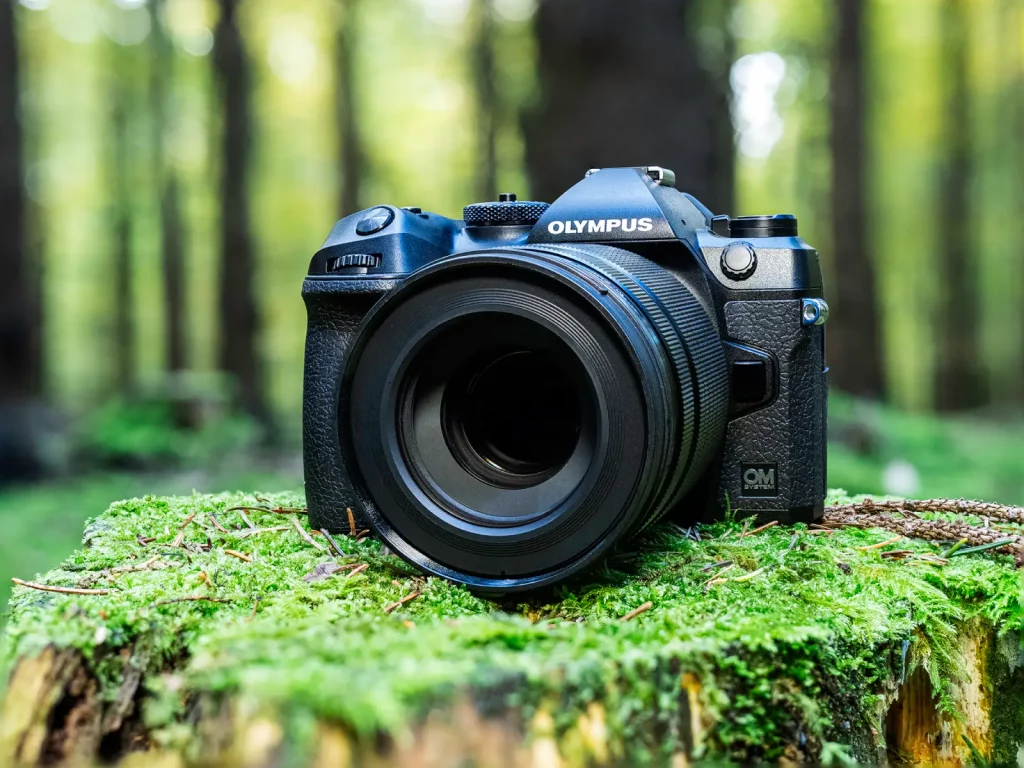
In 2026, six years later, I can say: OM Digital Solutions is on a good path to positioning itself as a niche outdoor camera brand, not just through its products but through its communication too. By now, most of the cameras are splash- and dust-proof, and the lenses are gradually catching up. The change of ownership in April 2026, when CEO Shigemi Sugimoto took over the majority stake through OJ Holdings, shows that the company is still in motion structurally as well. That’s not ninety years of continuity. It’s more like ninety years that kept having to reinvent themselves to survive.
What’s actually left, technically
For all the discussion around the brand, you shouldn’t forget what OM System can actually do today. OM System is still the market leader in in-body image stabilisation, even though there’s no longer a manufacturer left that doesn’t offer the technology. They’re also, once again, ahead of the curve technologically, packing a lot of computational photography into the camera. Live Composite and Live ND are just two of many features that make photographers’ lives easier. That’s the real continuity between the 1972 OM-1 and today’s OM-1 Mark II: not the name alone, but the attitude of building compact systems that can do more, technically, than their size suggests.
September 9th
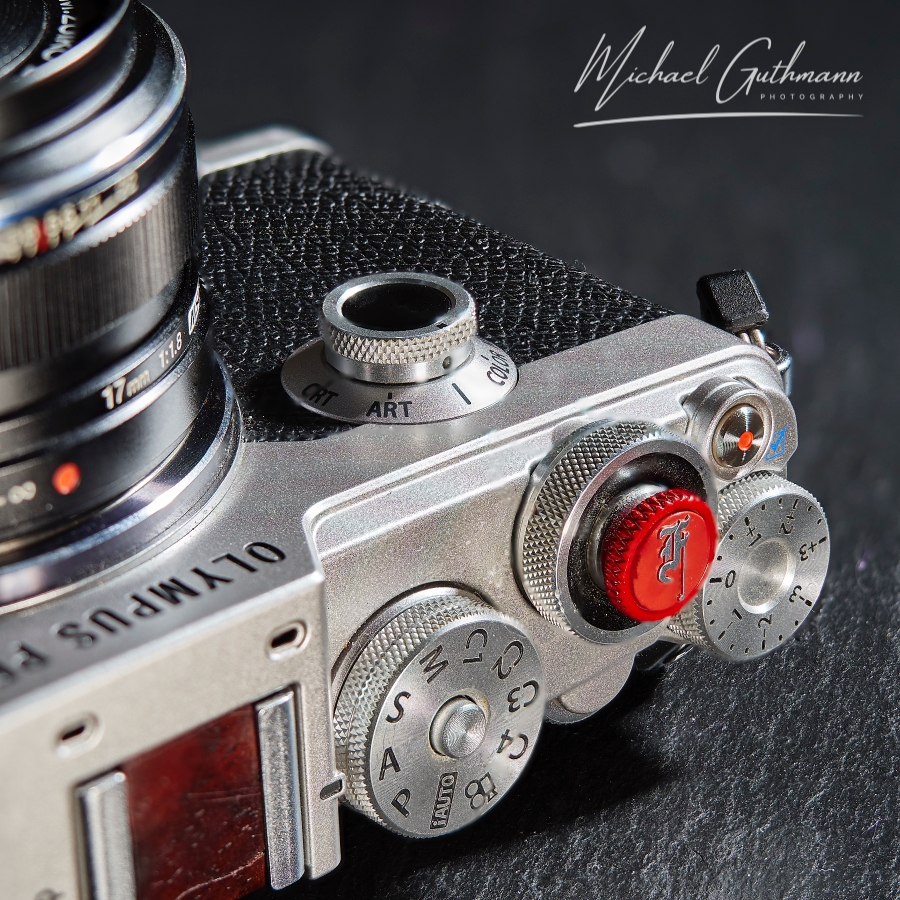
One last detail, something I only knew as a vague rumour while writing this article and that has since been fully cleared up. On September 9th, 2026, OM System used its announced “Virtual First Look Event” to unveil an actual new PEN, no suffix at all, not a successor to the legendary PEN-F. It turned out to be exactly what had been hinted at before: an affordable entry-level model that slots in price between the older Olympus E-M10 Mark IV and the current OM-5 Mark II. The body costs $999, or $1,099 as a kit with the new 14-42mm f/3.5-5.6 III. It ships in Europe from early October 2026, and in the US from late October.
What’s interesting is what OM System actually built into the new PEN: the same 20-megapixel sensor and TruPic IX processor as the OM-5 Mark II, five-axis in-body stabilisation rated at 5.5 stops (more on that in my article on IBIS and Sync IS), and, for the first time in PEN history, an official splash-resistance rating of IPX1. Stabilisation and weather-sealing together are hard to find at this price point from any other manufacturer. Even the most affordable camera in the current lineup now carries the two traits OM System wants to be known for as a brand.
For me, that carries a second, nicer point, one that’s no longer hypothetical. It really is a PEN. The PEN was Maitani’s first major invention back in 1959, compact and uncompromising, just like the OM-1 that followed later. Two product lines, one designer, one common thread that now stretches all the way to September 2026. And the fact that September 9th, of all dates, almost ninety years after the presumed market launch of the company’s very first camera, became the date for the new PEN remains a nice coincidence to me, planned or not.
Why I’m sticking with it anyway
Even though I haven’t worked as a product manager at OM Digital Solutions for more than four years now, I’m still convinced by the concept. For wildlife photographers especially, there’s no better alternative. Size and weight are an unbeatable argument for me. My life is so much easier that I can more than live with the smaller drawbacks the system brings along.
When I’m out in the field today with the OM-1, waiting for wildlife, the M-1 that started it all is still sitting at home in my cabinet. Ninety years is a long time for a camera company that, in this form, probably shouldn’t exist any more, twice over. That 2026 can still be celebrated says more about the persistence of the people behind it than about good corporate planning, and a little bit about my own persistence too.
What was your first Olympus or OM camera? Feel free to tell me in the comments. I’m curious how many of you have been with the brand even longer than I have.