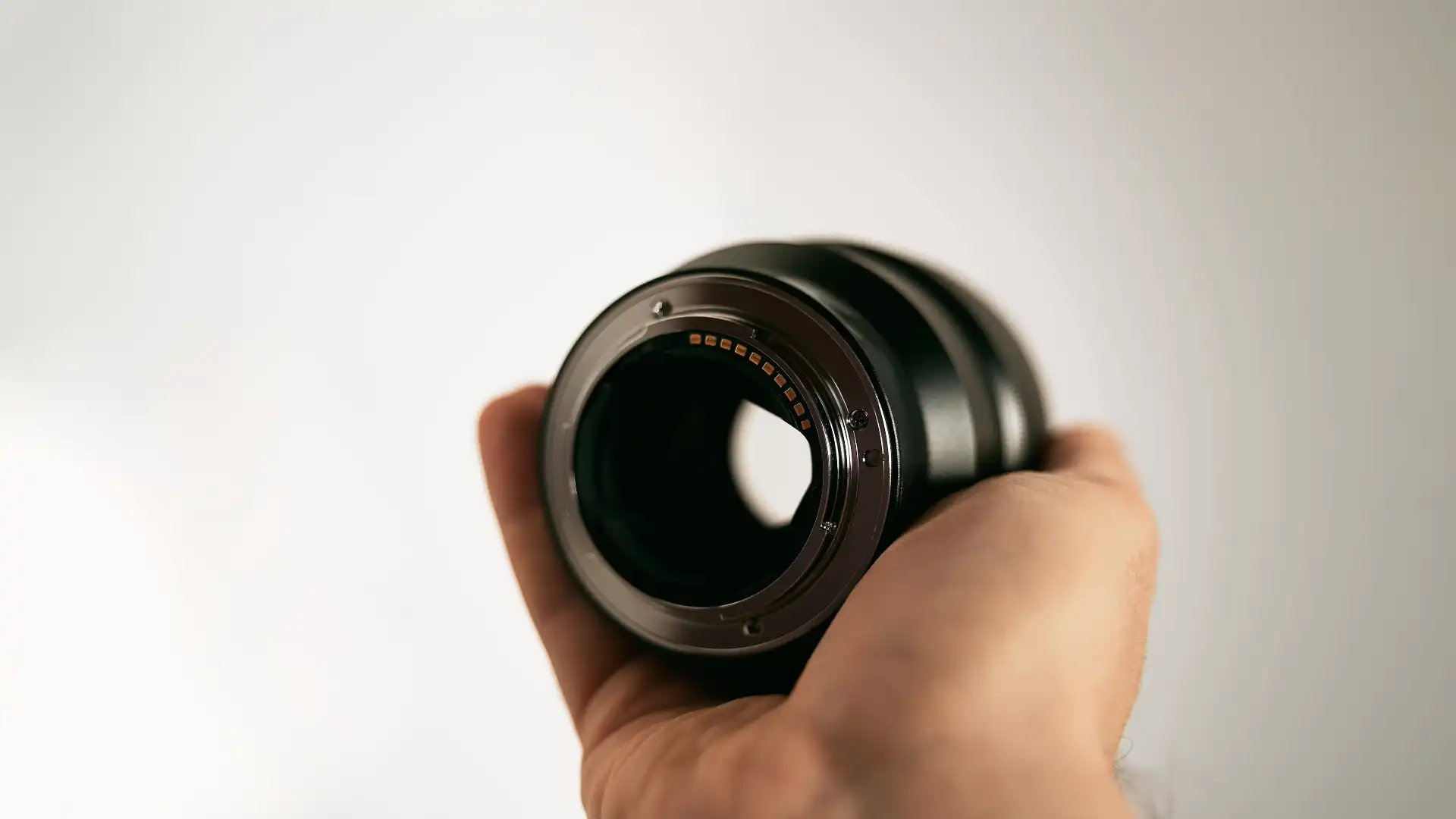
When you buy a new camera, it usually comes with a kit zoom, and the first thing most people do is zoom in. What focal length actually means and how strongly it shapes your image often remains a mystery. Yet understanding focal length is one of the most important steps toward using your lenses creatively. In this article, I explain everything you need to know about it, from a simple definition to its practical use in wildlife, landscape, and travel photography.
What is focal length? The simple explanation
Focal length is a physical property of a lens and is given in millimetres (mm). It describes the distance between the optical centre of the lens and the camera sensor when a distant subject is in focus.
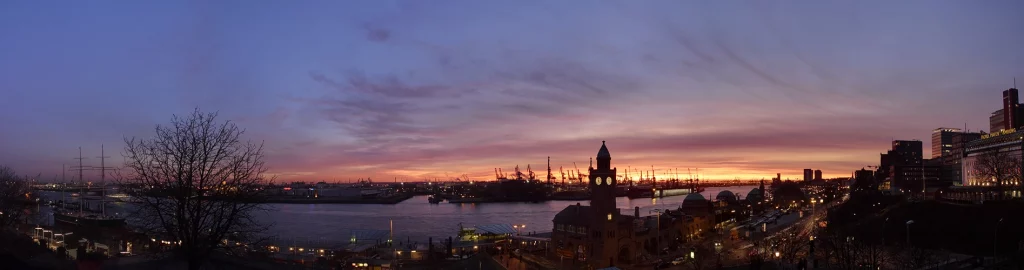
What this means in practice: focal length largely defines the character of your image. It influences how natural or dramatic a scene looks, whether distances appear stretched or compressed, and how strongly the background is separated from the subject. Choosing the focal length is therefore one of the most important creative decisions you make, before you even press the shutter.

An important thing to understand: focal length on its own tells you little until you know which sensor it refers to. A 50 mm lens behaves like the human eye on a 35mm camera. On a Micro Four Thirds camera from OM System, that same lens behaves like a 100 mm telephoto.
Focal length and angle of view
Directly tied to focal length is the angle of view, in other words how much of the scene in front of you ends up in the frame. A narrow angle of view (long focal length) shows a tight crop, while a wide angle of view (short focal length) shows a lot of the surroundings.
The angle of view depends not only on focal length but also on sensor size. That is why focal lengths are often quoted as a 35mm equivalent, to make cameras with different sensor sizes comparable.
The focal length ranges at a glance
In photography, we distinguish three basic focal length ranges:
| Range | 35mm | Micro Four Thirds (MFT) | Typical use |
|---|---|---|---|
| Wide angle | < 35 mm | < 17 mm | Landscape, architecture, interiors |
| Normal | 40–60 mm | 20–30 mm | Street, portrait, everyday |
| Telephoto | > 70 mm | > 35 mm | Wildlife, sport, portraits at a distance |
| Super telephoto | > 300 mm | > 150 mm | Bird photography, safari |
These boundaries are not rigid, but they give you a good orientation.
Wide angle (< 35 mm / < 17 mm MFT)
Wide-angle lenses show more of the scene than the human eye perceives. This has two striking effects: the foreground is emphasised and appears larger, while the background looks smaller. Distances are also pulled apart optically, creating a strong sense of space and three-dimensionality.
Typical uses: landscape photography, architecture photography, travel reportage, interiors.
For OM System users: the M.Zuiko 8–25 mm F4 Pro covers a large part of the wide-angle range, with the angle of view of a 16–50 mm lens in 35mm terms.
Normal lens (40–60 mm / 20–30 mm MFT)
The normal lens roughly reproduces what the human eye sees, without distortion and without compression. Distances look natural and the perspective matches our everyday vision. That is why normal focal lengths are often felt to be „boring“, even though they allow for an honest, direct visual language.
A classic: the M.Zuiko 25 mm F1.8.
Telephoto lens (> 70 mm / > 35 mm MFT)
Telephoto lenses bring distant subjects closer. Something interesting happens to the perspective in the process: distances are compressed, and background and foreground appear to move closer together. This makes telephoto lenses ideal for portraits (flattering perspective, beautiful bokeh) and wildlife photography (keeping your distance from the animal).
Focal length and the sense of space
Choosing the focal length is a powerful creative tool, going far beyond simply „zooming in“.
- Wide angle: stretches the space, emphasises the foreground, creates depth
- Normal: natural impression, the way the human eye sees
- Telephoto: compresses the space, pulls foreground and background together
A classic experiment: photograph the same subject so that it always appears the same size in the frame, but change the focal length and adjust your distance accordingly. You will clearly see how the background and the spatial effect change.
Focal length and depth of field
An often underestimated effect of focal length: it influences the depth of field, that is, how large the area is that appears sharp in a photo.
The rule of thumb: at the same aperture and the same framing, the longer the focal length, the shallower the depth of field and the stronger the background blur (bokeh).
This explains why portrait photographers often reach for telephoto lenses: a longer focal length (e.g. 75–100 mm on MFT) combined with a large aperture (e.g. F1.8) produces a soft, smooth bokeh that separates the subject perfectly from the background.
You will find more details on this in my article „Four factors that influence the image quality of digital cameras“.
35mm vs. Micro Four Thirds: the crop factor
Anyone using OM System cameras encounters this term every day: the crop factor. With Micro Four Thirds, it is 2.0, which means the effective focal length corresponds to twice the number printed on the lens, in 35mm terms.
Practical examples:
| Lens (MFT) | 35mm equivalent |
|---|---|
| M.Zuiko 8 mm | 16 mm |
| M.Zuiko 12 mm | 24 mm |
| M.Zuiko 25 mm F1.8 | 50 mm (normal lens) |
| M.Zuiko 75 mm F1.8 | 150 mm (short telephoto) |
| M.Zuiko 150–600 mm | 300–1200 mm! |
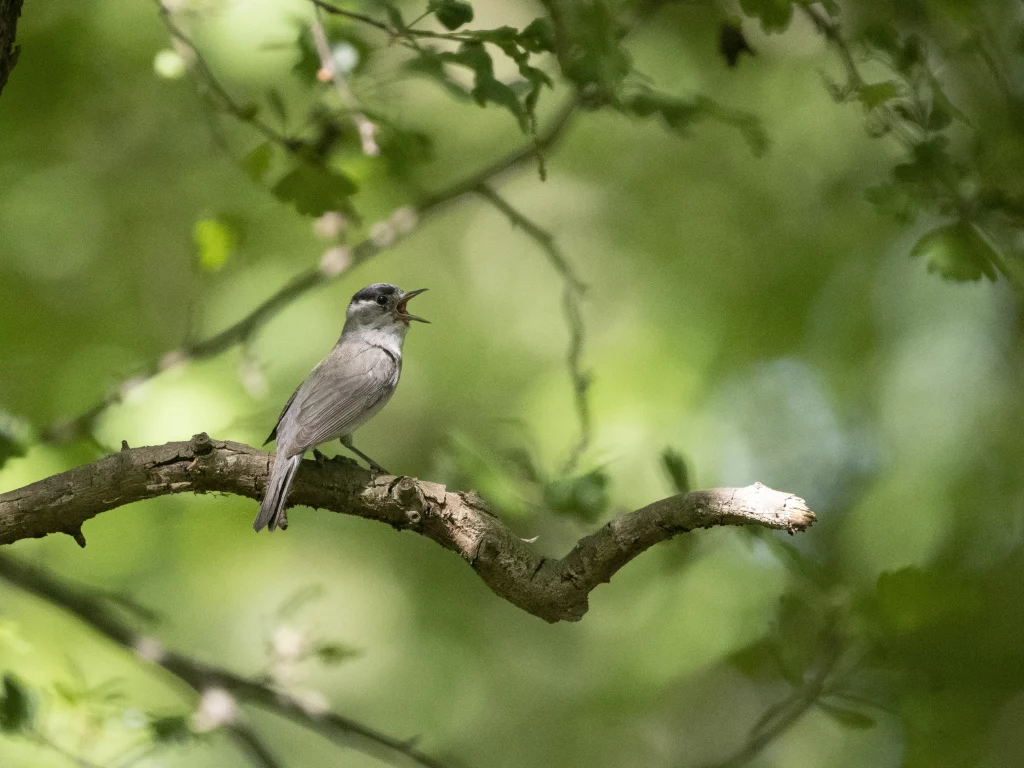
This is one of the biggest advantages of the MFT system for wildlife photographers: with the M.Zuiko 150–600 mm you reach a range that would require a monster lens on 35mm. You can find my pick of the best Olympus / OMDS lenses in my article „The best OM System lenses for wildlife“.
Which focal length for which subject?
| Subject area | Recommendation (MFT) | Equivalent (35mm) | Why? |
|---|---|---|---|
| Landscape | 7–17 mm | 14–34 mm | Wide field of view, sense of depth |
| Architecture | 7–12 mm | 14–24 mm | Fit the whole building in frame |
| Travel / street | 12–25 mm | 24–50 mm | Flexible, unobtrusive |
| Portrait | 45–75 mm | 90–150 mm | Flattering perspective |
| Wildlife / birds | 100–600 mm | 200–1200 mm | Distance from the animal, long reach |
| Sport | 75–300 mm | 150–600 mm | Fast subjects from a distance |
| Macro | 30–60 mm | 60–120 mm | Get up close |
Using focal length creatively: 3 practical exercises
Theory is good, trying things out is better. Here are three simple exercises to sharpen your feel for focal length:
Exercise 1: The subject-size experiment
Photograph the same subject (e.g. a person) so that it appears the same size in the frame in every shot. To do this, change the focal length and adjust your position accordingly. Then compare the backgrounds: you will see the spatial effect immediately.
Exercise 2: Perspective play with a wide angle
Get close to an interesting object with a wide-angle lens (e.g. a flower, a stone). The object becomes large and dominant while the background shrinks, a classic wide-angle effect for dramatic landscape photos.
Exercise 3: A telephoto view through the city
Stand in an elevated position and shoot down a busy street with a long telephoto lens (e.g. 300 mm on MFT). Watch how the sense of depth collapses and everything appears on a single plane: that is telephoto compression.
Frequently asked questions about focal length
What is focal length in simple terms?
Focal length indicates how strongly a lens bundles the light: the longer the focal length (in mm), the tighter the framing and the more distant subjects are zoomed in.
Which focal length matches the human eye?
The human eye has an angle of view of about 50–55°, which corresponds to a focal length of roughly 43–50 mm in 35mm terms. On an MFT camera that is a 21–25 mm lens.
What is the difference between focal length and zoom?
Focal length is a fixed optical property. „Zoom“ means that a lens covers different focal lengths (e.g. 12–100 mm). A prime lens, by contrast, has only a single focal length.
Does focal length affect image quality?
Indirectly, yes. Shorter focal lengths (wide angle) tend to show more distortion and edge softness on budget lenses. High-quality primes are often considered sharper than zoom lenses in the same price class.
What does focal length mean on Micro Four Thirds?
On MFT cameras the printed focal length has to be multiplied by a factor of 2 to get the 35mm equivalent. A 25 mm lens behaves like a 50 mm lens on a 35mm camera.
Do you have questions about focal length or about the right OM System lenses? Feel free to leave me a comment!