Introduction to the Trip
Before I set off for Svalbard, the northernmost point I had ever visited was Iceland. Understandably, I was both excited and a little nervous before departure: did I have the right clothing for the cold? What camera equipment should I bring to make the most of the trip photographically? After all, you do not travel every day to a place where you are completely cut off from the outside world. PolarQuest offers expeditions that explore the Arctic around Svalbard by ship — in my case the Quest. Once you are underway, there is no possibility of getting anything you forgot.
Equipment for the Trip
I decided to bring the E-M1X for its weather sealing, along with my most important M.Zuiko Pro lenses. The M.Zuiko Digital ED 7-14mm F2.8 PRO for landscapes, the M.Zuiko Digital ED 12-100mm F4 Pro for general shots, and the two long telephoto lenses — M.Zuiko Digital ED 40-150mm F2.8 PRO and M.Zuiko Digital ED 300mm F4 IS PRO — for wildlife. As a backup in case animals were further away than expected, I also packed both teleconverters, the MC-14 and MC-20. Since I was still under the 8 kg carry-on limit with all of that, I even managed to squeeze in the 8mm F1.8.
Boarding the Ship
And so I headed off. The flight took me from Hamburg via Oslo to Longyearbyen. Before we boarded, the expedition leader Adam gave us a thorough safety briefing. Impressed by the professionalism of it all, I was eager to get on the Quest — but that was not quite how it worked. The ship was not moored alongside the quay as I had imagined; it was anchored offshore, and we were ferried out in Zodiacs. Zodiacs are small, powerfully motorised inflatable boats used by the military for their manoeuvrability and stability when landing from larger vessels. Barely on board, we immediately had to complete a ship evacuation drill before we could finally get underway.
The Expedition
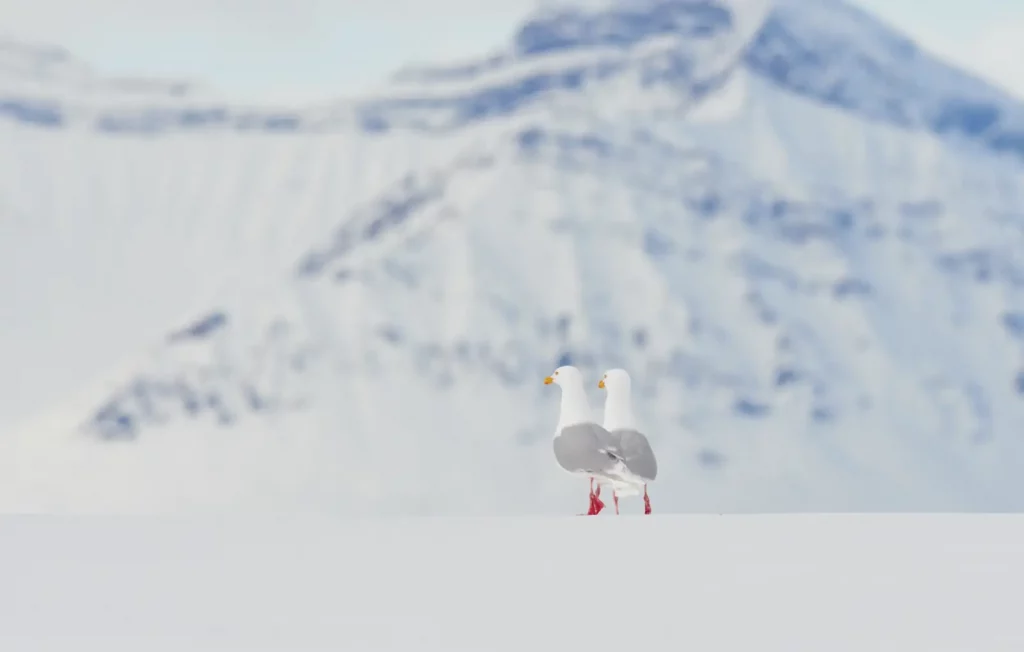
We set off — not northward as many had expected, but southward, to avoid the wind. In the Arctic, weather is not judged by sunshine, rain or snow, nor even by temperature, but by wind speed. Wind affects not only how rough the sea is, but also the perceived temperature: the less wind, the better. Initially, many of the participants were disappointed. The best chance of spotting a polar bear is in the north, where the pack ice is.
Our First Polar Bear
The disappointment did not last long, though. Just a few hours after departure, there was an announcement asking us to get ready for the first “outing” — a polar bear had been spotted. We were barely in the Zodiacs before we were heading toward the shore to get closer. But where was the bear? The guides (five experienced guides for 50 passengers) tried to describe where to look. For the untrained eye, spotting a white animal against a snow-white background is no easy feat. Eventually we succeeded — and it turned out that my decision to bring both teleconverters had been a wise one. The estimated distance to the polar bear was around 1–2 km with no chance of getting closer. With the 300mm F4 IS PRO and the MC-20, you could just about make out the bear in the images.
Even so, getting sharp shots was extremely difficult. We were on a small inflatable boat that was constantly moving. The 300mm F4 with the MC-20 gives a field of view equivalent to 1200mm in 35mm terms, and every movement was amplified accordingly. Fortunately, the 300mm F4 has built-in image stabilisation that works perfectly with the E-M1X’s in-body stabilisation in Sync IS mode. Without that combination, framing and getting sharp images at such a long focal length would have been impossible. Still, I came away from that day without a single satisfying shot — the bear was simply too far away. Despite the thrill of seeing a polar bear in its natural habitat, I was disappointed.
Arctic Foxes
But again, the disappointment was short-lived. Shortly afterwards, a guide reported two Arctic foxes — and I was able to take perfect shots of them. Once again, thanks to the combination of the 300mm F4 IS PRO, the teleconverter, and the seamless cooperation between the camera body and lens stabilisation. Using a tripod in a Zodiac? Impossible. No room, and pointless anyway with the boat constantly moving.
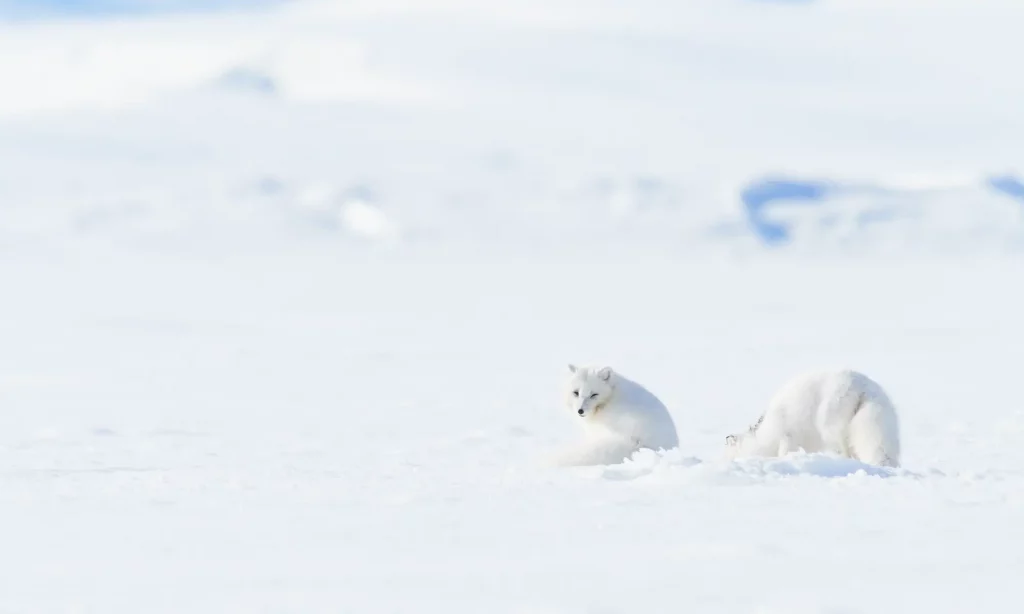
The decision to head south turned out to be a stroke of luck. The weather was outstanding — not just because there was almost no wind, but because we had sunshine for most of the trip. At this time of year, the sun in the north shines for 24 hours a day.
Polar Bears
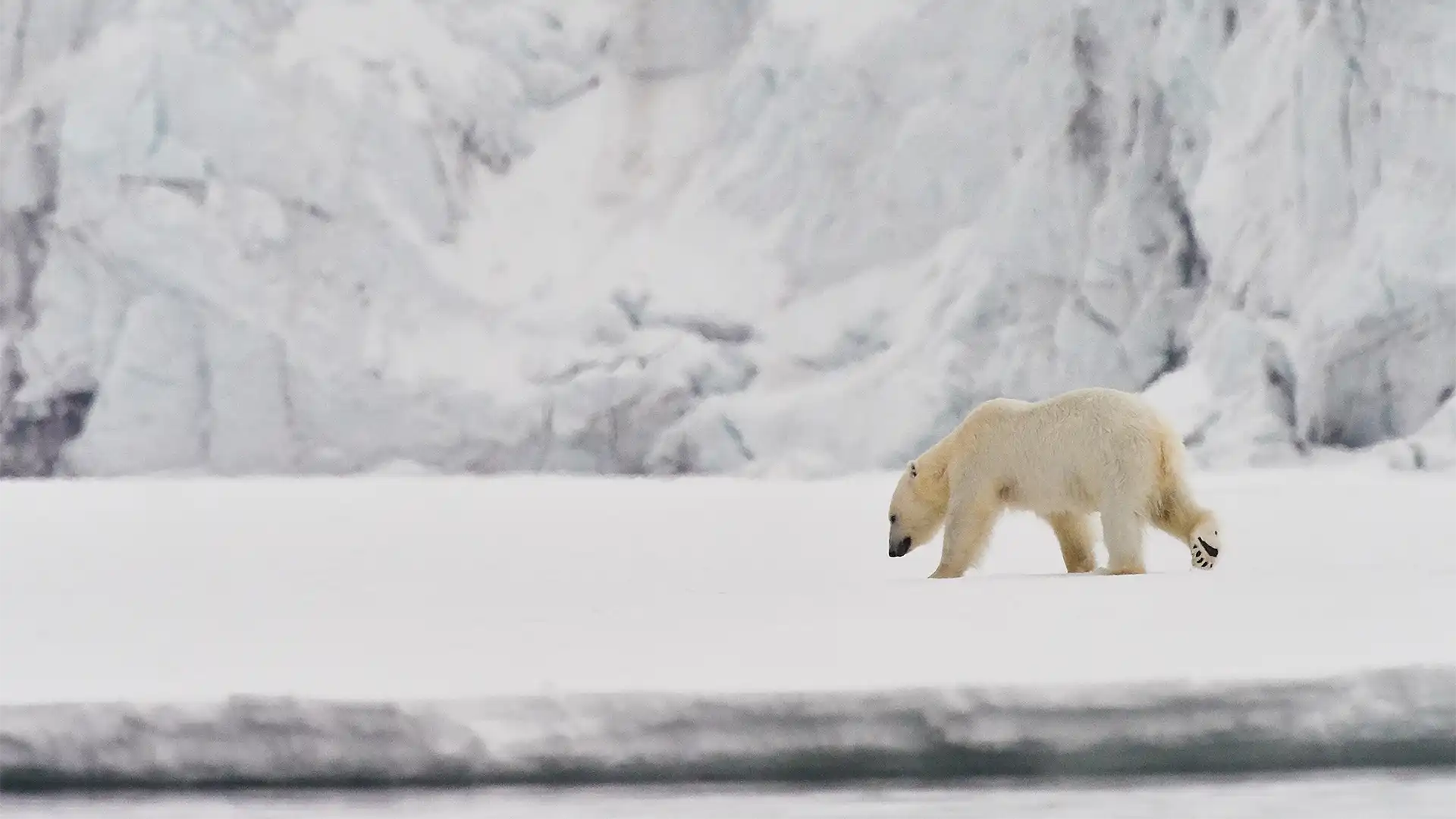
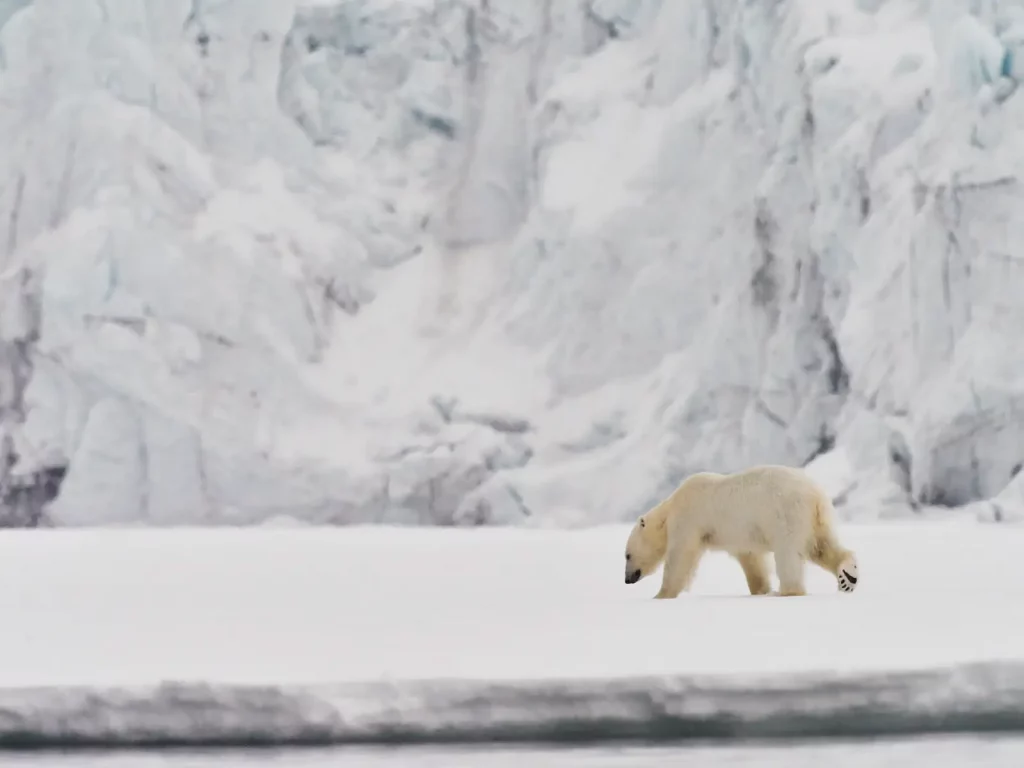
On the third day, after our morning and afternoon outings were already done, an announcement came at 10:30 pm asking us to prepare for another outing — a polar bear had been spotted near the ice edge. Anywhere else on earth, photography would have been out of the question at that hour. But up here in the north in May, it was still broad daylight. So we put on our warm layers again and climbed back into the Zodiac. This time finding the bear was no problem: it was only about 500 metres away, and we had had plenty of practice in the days before. When we returned to the Quest two hours later, I had more than satisfying images of a polar bear in its natural environment.
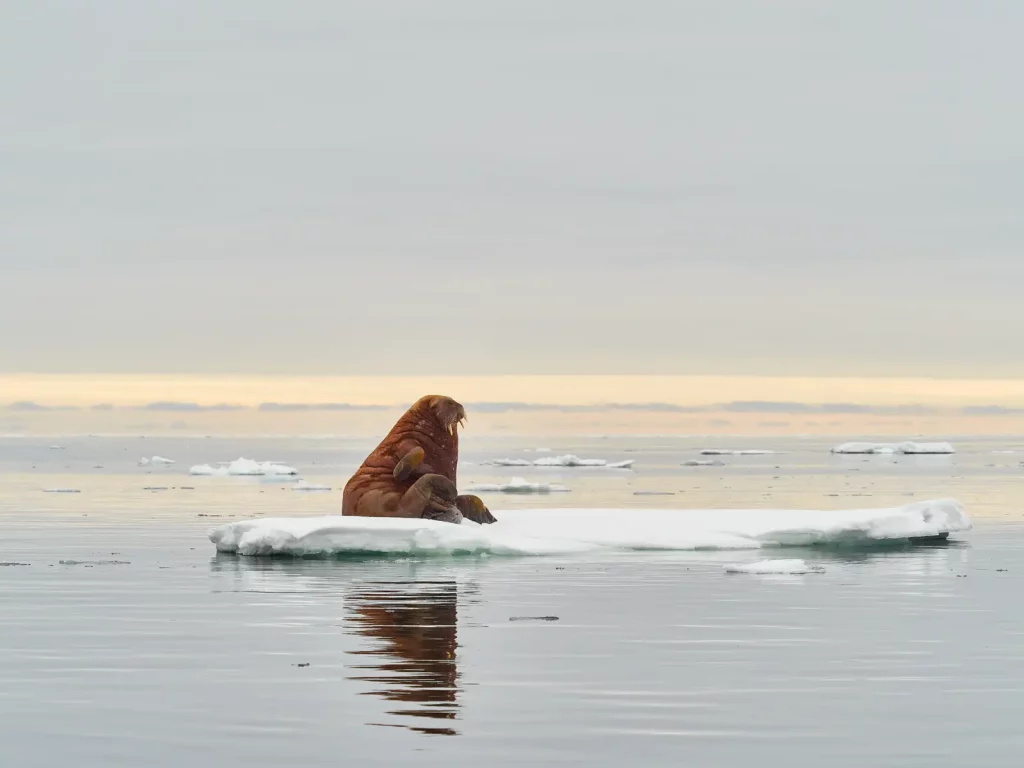
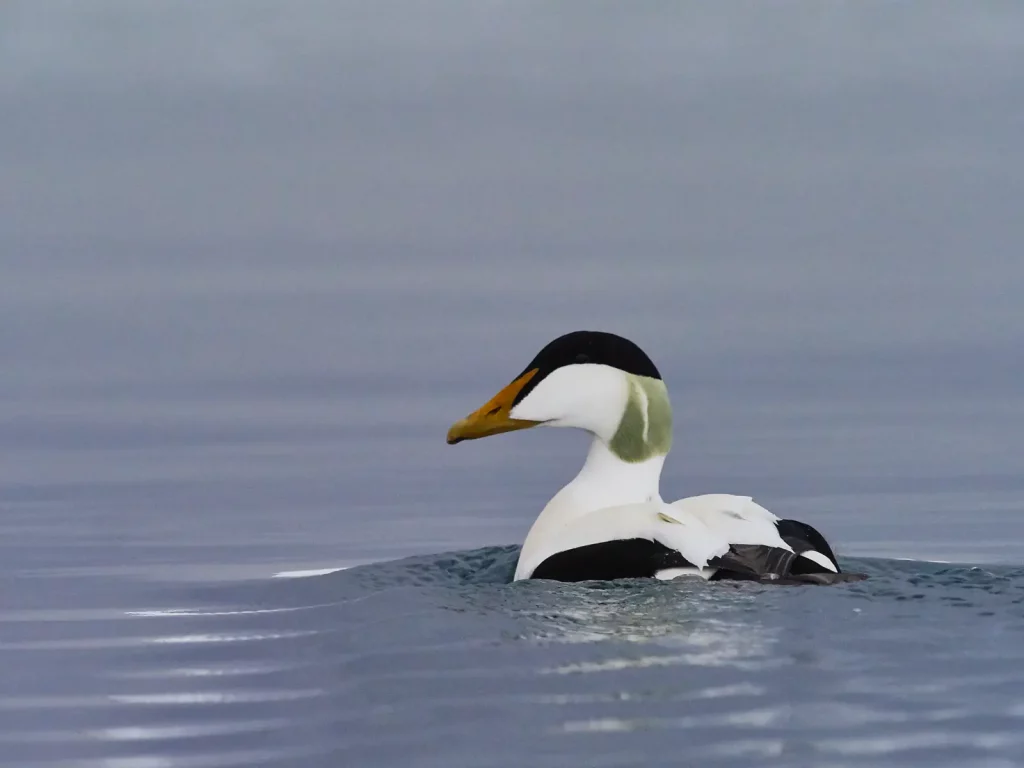
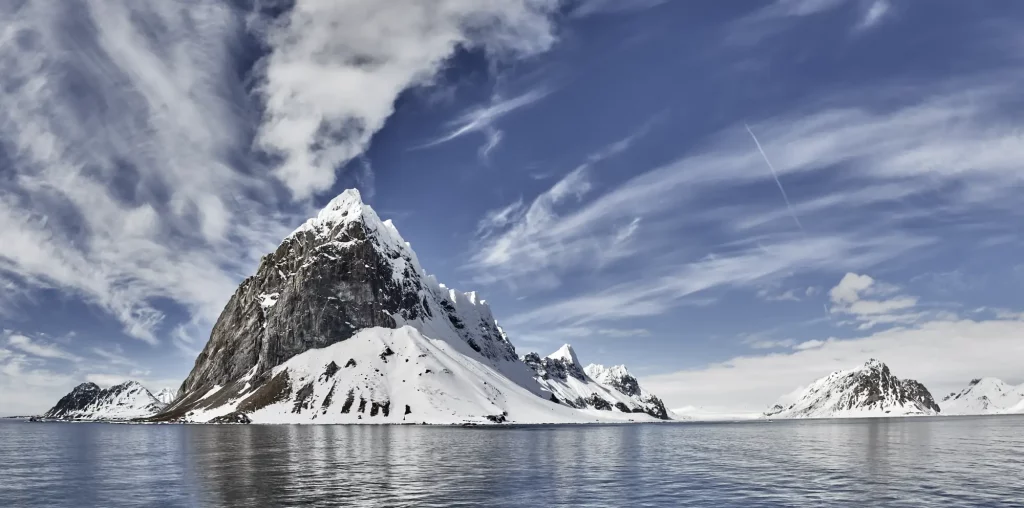
I do not want to give the impression that polar bears are the only photogenic subject in the Arctic. Far from it. During this trip I came to understand why “birders” find common eiders so beautiful. I fell instantly in love with the little auks. But walruses, seals, and above all the unique landscape bathed in a quality of light you simply do not get in more southerly latitudes — all of it made my photographer’s heart beat faster. I was genuinely sad when the trip ended eight days later in Longyearbyen. Looking back, my worries about clothing and equipment had been completely unfounded — everything I brought was exactly right. The long telephoto lenses combined with the teleconverters were perfect for wildlife. The shorter focal lengths came into their own when it was time to capture the breathtaking landscape.
Conclusion
A big thank you to PolarQuest and Olympus for making this wonderful experience possible. One final word about the polar bears. They have become a symbol of climate change because their habitat is severely threatened. We were fortunate to have Nikita Ovsyanikov on board the Quest as one of our guides, and I had the pleasure of discussing the future of polar bears with him. Nikita is cautiously optimistic that polar bears will survive global warming — they have already done so five times in the past. The difference is that during those previous warm periods, they were undisturbed by humans. That is the core of the problem today, because in many countries it is still legal to shoot polar bears, even though the population has now reached a critical threshold. For anyone interested in the subject, I recommend reading GLOBAL FRAUD AROUND POLAR BEARS.
I hope I have been able to give you a small taste of what this trip was like. I have also been to Botswana and Zimbabwe, and written a short report about that too: “A Quick Trip to the Big Five”. Well worth a read!